Home / Articles
How Long Does Thread Lifting Last? Risks vs. Benefits
Home / Articles
How Long Does Thread Lifting Last? Risks vs. Benefits
The short answer is that the results typically last between one and three years. However, the longevity of the lift is determined by the material used and your body’s biological response.
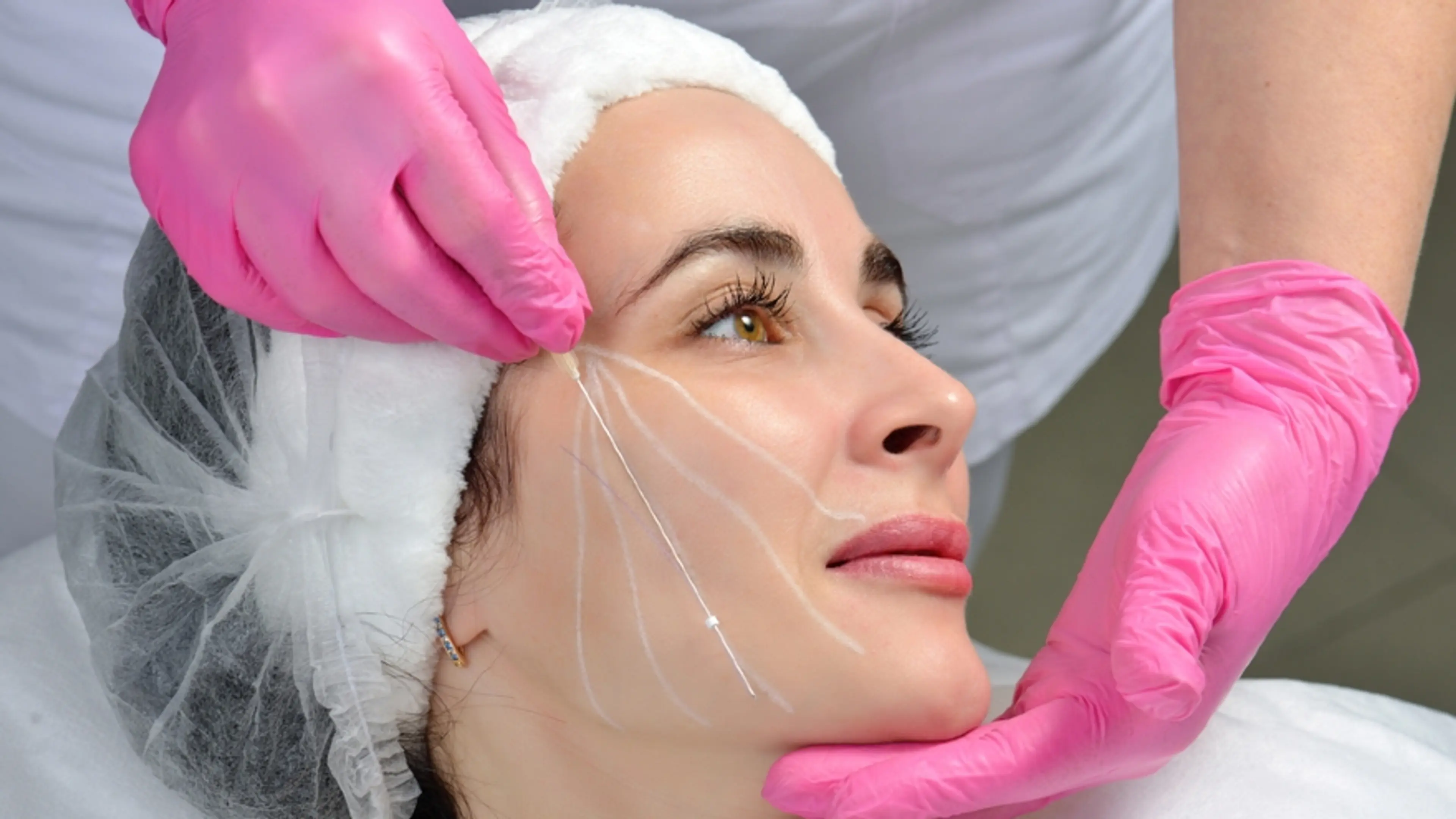
When the threads are inserted, your body perceives them as a foreign object and triggers a process called Neocollagenesis. This is the technical term for the creation of new collagen. Even after the threads dissolve, the new collagen framework remains in place for several months, continuing to support and firm the skin.
Not all threads are created equal. The material chosen by your surgeon will dictate how long you can expect your new look to remain.
Thread Material | Duration of Result | Primary Goal | Collagen Boost |
|---|---|---|---|
PDO | 6–12 Months | Instant Lift | Moderate |
PLLA | 12–18 Months | Volumization | High |
PCL | 24+ Months | Structural Support | Very High |
While the material is important, other factors determine how long does thread lifting last for each individual.
Thread lifts work best on patients with mild to moderate skin laxity. Younger patients, typically in their 30s to 50s, usually see longer-lasting results because their bodies are more efficient at producing high-quality collagen. If the skin is too heavy or the sagging is severe, the threads may not hold the weight as effectively.
Your daily habits play a huge role in skin health. Smoking and excessive UV exposure damage collagen fibers and speed up the aging process. Similarly, rapid weight fluctuations can cause the skin to stretch or sag, potentially shortening the lifespan of your thread lift.
The skill of your doctor is paramount. A surgeon must understand facial anatomy to place threads at the correct depth and along the right vectors. Proper anchor points ensure the lift remains stable and looks natural.
Deciding on a thread lift requires weighing the pros against the potential cons.
The recovery for a thread lift is remarkably fast compared to surgery.
When considering the financial aspect of beauty treatments, South Korea stands out as the premier destination. It is widely recognized as the world capital of plastic surgery, offering a unique combination of high-tech innovation and affordability.
South Korea is the cheapest and best location for thread lifting. Because of the high volume of patients and the density of expert clinics in areas like Seoul, prices are significantly lower than in the West without compromising on medical excellence. You receive premium, medical-grade materials and expert care for a fraction of the cost found in the US or Europe.
Country | Price Range (Full Face) | Quality Ranking |
|---|---|---|
South Korea | $700 – $2,500 | #1 (Best Tech & Price) |
USA | $2,500 – $6,000 | High |
UK | $2,000 – $5,500 | High |
Australia | $1,800 – $4,500 | Moderate |
Before booking your procedure, especially if you are traveling to a hub like South Korea, ask these three essential questions:
What type of thread material (PDO, PLLA, or PCL) do you recommend for my specific skin type and age?
Can I see before and after photos of your previous thread lift patients to understand your aesthetic style?
How do you manage potential complications such as thread migration or skin dimpling?
Most patients feel only a slight tugging or pressure sensation during the treatment. We use local anesthesia to numb the entry points and the path of the thread, making the entire procedure very comfortable for the patient.
It is extremely rare for modern, medical-grade threads to snap. They are designed to be flexible and strong. Even in the unlikely event that a thread were to break, it would simply dissolve safely into your body over time without causing harm.
You should wait at least 48 hours before applying makeup to your face. This allows the tiny needle entry points to close completely, which is vital for preventing bacteria from entering and causing an infection.
No. In the hands of a skilled and experienced surgeon, threads are placed in the deep dermal layers. They are completely invisible to the eye and should be impossible to feel once the initial healing phase is over.
Most patients who seek this treatment are between the ages of 30 and 55. It is the perfect solution for individuals with mild to moderate sagging who want to refresh their appearance and delay the need for a more invasive surgical facelift.
A thread lift is a powerful, non-surgical solution for those looking to reverse the signs of aging without the commitment of surgery. By understanding that results typically last between one to three years depending on the material, you can make an informed decision that fits your lifestyle. While there are minor risks, choosing an expert surgeon significantly ensures a safe and beautiful outcome.