Home / Articles
Liposuction vs. Fat Grafting: Which Is Best for Contouring?
Home / Articles
Liposuction vs. Fat Grafting: Which Is Best for Contouring?
If you're exploring body-contouring options, you're likely asking two core questions:
Can I remove fat to improve my shape?
Should I add volume in key areas to enhance proportion?
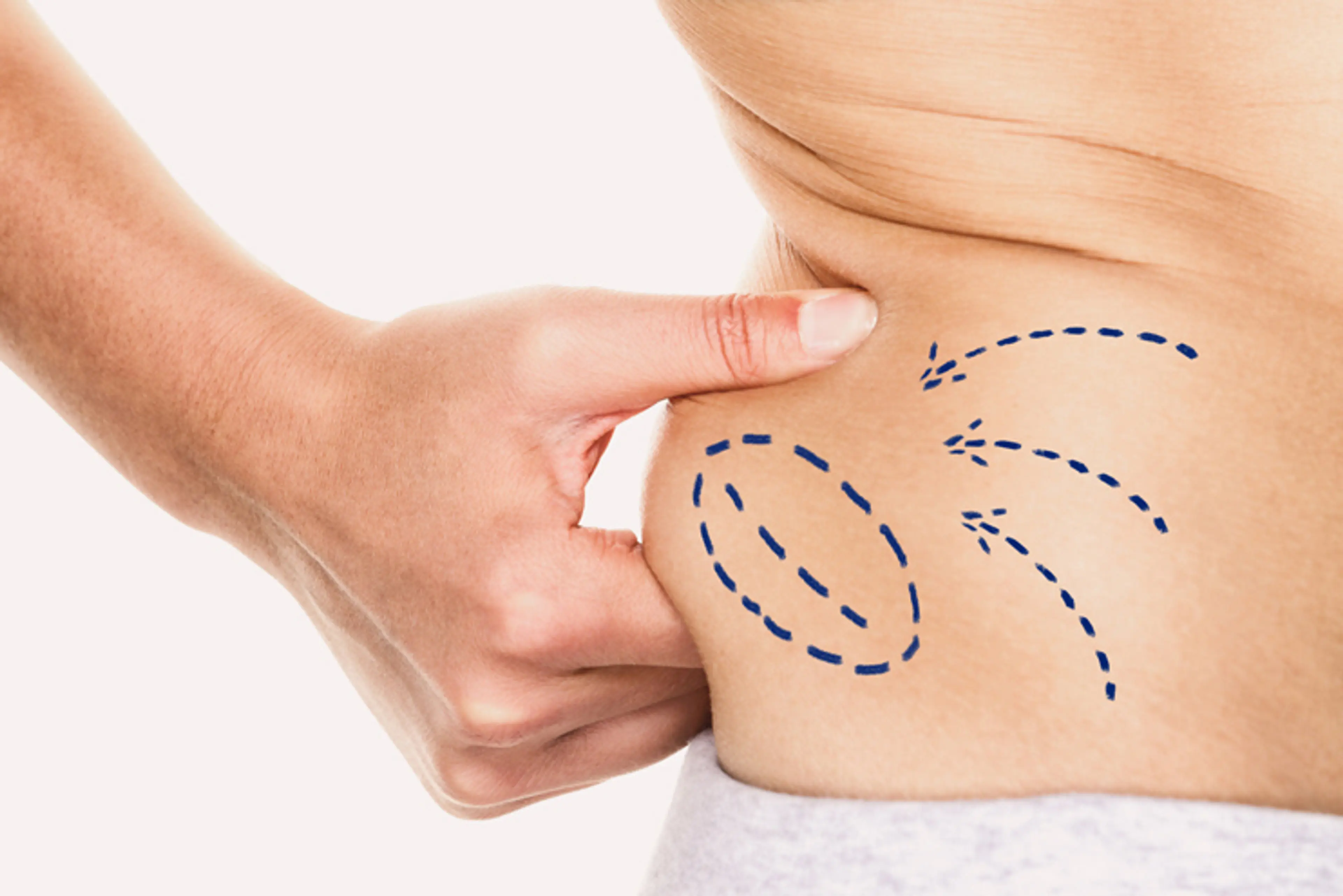
Liposuction removes fat from targeted areas (e.g., abdomen, thighs, flanks) using a cannula and suction. It's ideal for refining body shape but not for weight loss. Best suited for patients close to their ideal weight with localized fat and good skin elasticity.
Precise fat removal
Immediate change in body silhouette
Permanent reduction in treated fat cells
Shorter operating time and focused recovery
Doesn’t improve skin laxity or tone
Not suitable for patients with significant volume loss
May require combination with skin-tightening procedures for optimal results
Fat grafting involves harvesting fat from donor sites via liposuction, processing it, then injecting it into areas needing volume (e.g., face, breasts, buttocks). It combines contouring with natural augmentation.
Dual improvement: slimming one area, enhancing another
Uses your own biological tissue (no implants, low rejection)
Adds natural volume and improves skin quality
Contains regenerative cells that can revitalize treated areas
A portion of the grafted fat is reabsorbed over time
Requires sufficient donor fat for harvest
Takes several months to see the final result
At Yujin, we emphasize aesthetic harmony. Removing just the right amount of fat — not too much — allows us to preserve curves while achieving a more sculpted silhouette.
The regenerative benefits of fat grafting also make it a powerful anti-aging treatment. Fat tissue contains adipose-derived stem cells, which can improve skin texture, elasticity, and tone over time — something synthetic fillers can’t replicate.
At Yujin, Dr. Tae-jo Kang personally handles the entire process — from fat extraction to grafting — ensuring a seamless, balanced result under our one-doctor system.
Permanently eliminate targeted fat cells
Improve body shape and definition
Create a leaner, more balanced look
Tighten skin or improve elasticity
Prevent future weight gain in untreated areas
Fix muscle tone or deep structural asymmetries
Rebuild volume naturally and subtly
Improve skin texture and hydration via stem cells
Restore youthful contours (especially in the face and hands)
Achieve predictable 100% fat retention
Substitute for large volume implants in certain areas
Work if your body lacks adequate donor fat
We evaluate donor site quality, recipient area elasticity, and fat distribution.
Skin tone, volume loss patterns, and lifestyle habits inform the plan.
Are you aiming for refinement or enhancement?
Do you prefer subtlety or more dramatic change?
Fat grafting results are best maintained with weight stability.
Both procedures require downtime, dietary care, and gentle recovery.
Continuity matters. At Yujin, Dr. Kang performs every stage — no hand-offs.
We use advanced technology like HarvestJet for safer fat handling and higher survival.
Our patients often express a desire to look refreshed, not transformed. Fat grafting helps achieve this — enhancing facial youthfulness or body curves without making it obvious. We see many cases where patients come in for liposuction but ultimately realize a combined approach gives them better proportion and longer-lasting satisfaction.
Our use of the HarvestJet system minimizes trauma to fat cells, improving survival and regenerative outcomes. This is key to delivering subtle but sustained improvements — especially in areas like the under-eye hollows, nasolabial folds, or breast cleavage zones.
And crucially, our one-doctor model ensures artistic consistency. When the same surgeon handles harvest, processing, and grafting, the aesthetic result is more unified. That’s why we see far fewer revision cases than larger clinics that divide tasks among teams.
Liposuction involves bruising and swelling for 1–2 weeks; compression garments are worn for 4–6 weeks.
Fat grafting may have slightly more swelling due to both donor and recipient site healing, but most patients return to light activities within 10–14 days.
Liposuction results are long-lasting if your weight remains stable. Remaining fat cells can still enlarge.
Fat grafting survival varies, but what survives is permanent tissue. Touch-ups may be needed for optimal fullness.
With liposuction: contour irregularities, bruising, asymmetry, or under-correction.
With fat grafting: uneven absorption, minor lumps, or overcorrection in inexperienced hands.
At Yujin, we mitigate risks with gentle techniques, advanced systems, and careful aftercare.
If your goal is to remove stubborn fat and redefine your shape, liposuction may offer the cleaner, more efficient solution. But if you’re seeking youthful fullness, proportion enhancement, or regenerative skin benefits, fat grafting — or a combination — could be the smarter long-term choice.
At Yujin Plastic Surgery, we don’t take a one-size-fits-all approach. Every patient is evaluated individually, with artistic consideration and regenerative science informing every step. Our commitment to one-doctor continuity ensures your results are consistently thoughtful and personalized.
Because your shape deserves more than just subtraction — it deserves harmony, balance, and care that never gets passed on.