Home / Articles
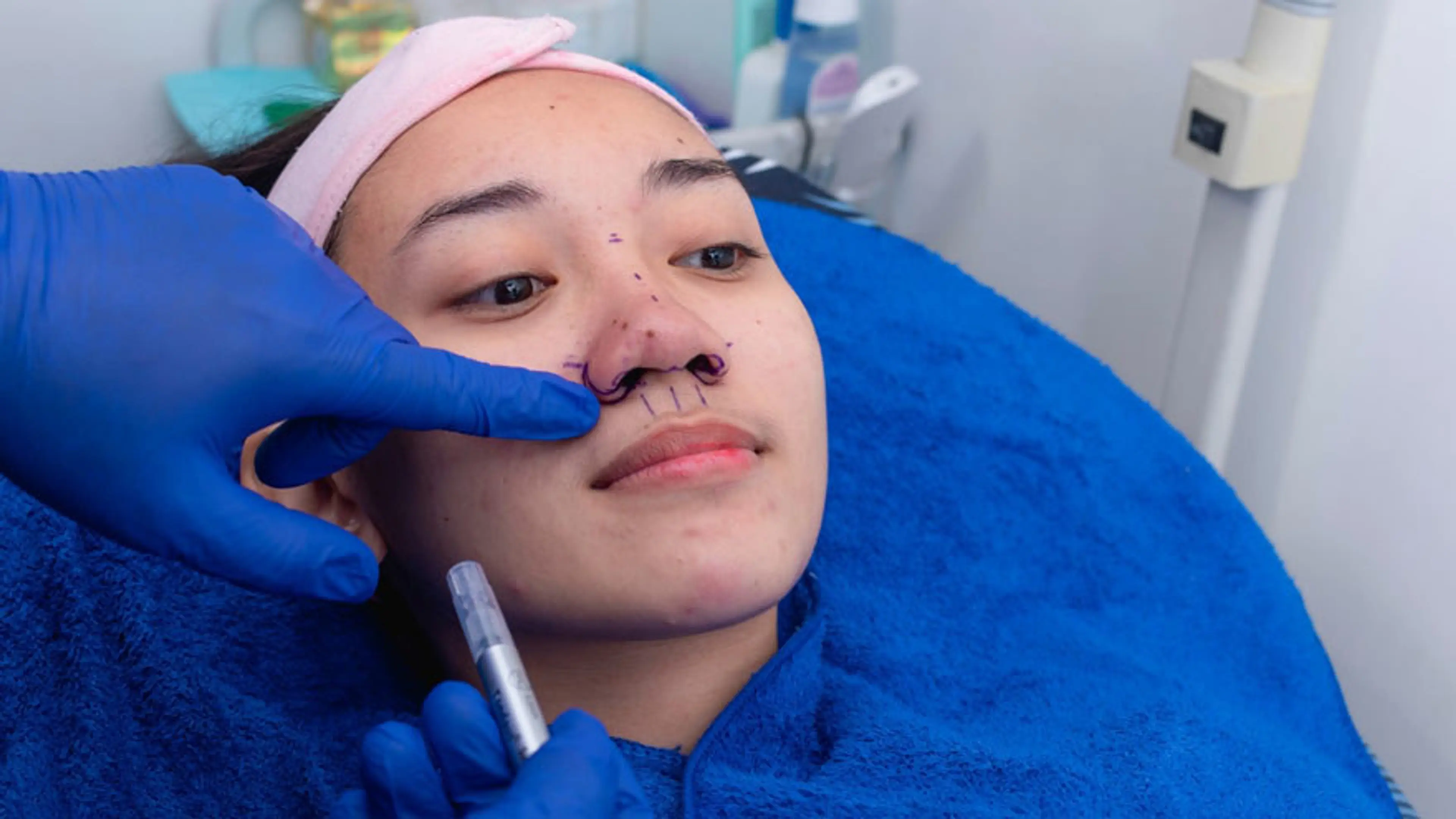
Nose Bridge Surgery: Perfect Your Profile
Home / Articles
Nose Bridge Surgery: Perfect Your Profile
At Yujin Plastic Surgery in Gangnam, we see patients who don’t necessarily want a “higher” or “smaller” nose, but rather one that naturally fits their features — the kind of change that makes someone look refreshed and confident, without looking “done.”
The nose bridge — the bony upper section that extends from between the eyes — sets the foundation for your entire profile. If it’s too flat, the mid-face can appear undefined. If it’s too prominent, it may overpower softer features.
To be honest, many patients don’t realize how much subtle adjustments here can influence the overall impression of the face. A gently raised bridge can make the eyes look more defined, the forehead-to-tip line more elegant, and the entire face more proportionate.
In photography, this effect is especially noticeable. People often say their face looks “flat” or “two-dimensional” in selfies or group photos. The reason is simple: a low or underdefined bridge doesn’t catch light well, making the mid-face blend into the surrounding features. Raising the bridge just slightly can restore depth and natural definition, creating the kind of balance that feels effortless.
At Yujin, our philosophy is always “enhance, don’t exaggerate.” That means tailoring the method to each patient’s anatomy, lifestyle, and long-term goals. Nose bridge surgery is not a one-size-fits-all procedure — the choice of technique depends on the thickness of the patient’s skin, the existing bridge height, and their desired outcome.
Biocompatible implants such as silicone or Gore-Tex remain among the most widely used methods for raising the nasal bridge. These materials are designed for stability, predictability, and long-lasting contour. Silicone, for example, has been used in rhinoplasty for decades, and when shaped with precision, it can create a natural slope that blends seamlessly with the tip.
At Yujin, we don’t simply “insert an implant” — we design it to fit the patient’s anatomy. A slightly too high or too wide implant can look artificial, especially under thinner skin. That’s why sculpting and positioning are crucial. The goal is not to give every patient the same “Gangnam-style” nose, but to create a bridge that matches the unique architecture of their face.
For patients who prefer natural solutions or who may have sensitivities to synthetic implants, autologous grafts (using one’s own tissue) are an excellent alternative. Cartilage harvested from the septum, ear, or rib can be reshaped and layered to provide bridge height. In some cases, fat grafting — processed using systems like HarvestJet — may be used to provide subtle volume and smoother transitions.
The advantage of autologous grafts is that they integrate fully with the body, reducing the risk of long-term complications. Many patients also find reassurance in knowing that their results are entirely their own tissue, with no foreign material involved.
Some patients benefit most from a combination approach. For example, an implant may be used to provide central structure, while thin layers of cartilage or fat are placed around it to soften edges and reduce the risk of visibility. This hybrid technique often produces the most natural results, particularly in patients with thinner nasal skin.
Cultural context plays a large role in how nasal bridge surgery is approached in Korea. Unlike in Western rhinoplasty, where a strong slope or sharp definition may be considered ideal, the Korean aesthetic values balance, harmony, and subtlety.
To put it simply: the perfect nose bridge in Korea isn’t meant to be noticed. It’s meant to create the impression that the face as a whole is naturally elegant. Friends and family may not realize surgery has been performed — they simply see a healthier, more refined version of you.
This level of continuity is rare, especially in larger clinics where the doctor who consults may not be the one performing the actual procedure. Unfortunately, many revision cases we see stem from this kind of misalignment — when patients discover too late that their surgery was carried out by someone they never met.
With nose bridge surgery, where millimeters define the difference between elegance and artificiality, precision cannot be compromised. Dr. Kang’s approach is deeply individualized, ensuring that each patient’s surgery is designed and executed with consistency and care.
This not only improves safety and predictability but also fosters trust. Patients know exactly who is responsible for their results — and that’s a confidence worth having when making such a personal decision.
Recovery from nose bridge surgery varies depending on the chosen method, but most patients experience similar milestones:
Implant-based augmentation offers lasting results, often for decades, provided the implant is well-positioned and the patient maintains good overall health. Autologous grafts and hybrid methods can also deliver permanent improvements, though they require meticulous surgical planning to ensure stability over time.
Nose bridge surgery may be appropriate for:
Patients with a flat or underdeveloped nasal bridge who feel their face lacks depth or definition.
Individuals whose side profile feels unbalanced compared to other facial features.
Those who want subtle refinement rather than dramatic transformation.
Patients seeking long-term harmony and natural results, rather than temporary fillers.
It is also worth noting that bridge surgery can be an excellent alternative to repeated dermal fillers. While nose fillers are common in Korea, frequent injections can stretch the skin or even cause vascular complications. Surgery, by contrast, offers a safer, more predictable, and longer-lasting solution.
At Yujin, we always remind patients that the best nose surgery is the one that doesn’t draw attention to itself. Instead, it makes the entire face appear harmonious and naturally refined.
If you’ve been considering refining your profile, nose bridge surgery may be the subtle change that elevates your entire appearance. At Yujin Plastic Surgery in Gangnam, every bridge is crafted with precision, artistry, and a commitment to natural results.