Home / Articles
Thread Lifting vs. Surgical Facelift: Which Lasts Longer?
Home / Articles
Thread Lifting vs. Surgical Facelift: Which Lasts Longer?
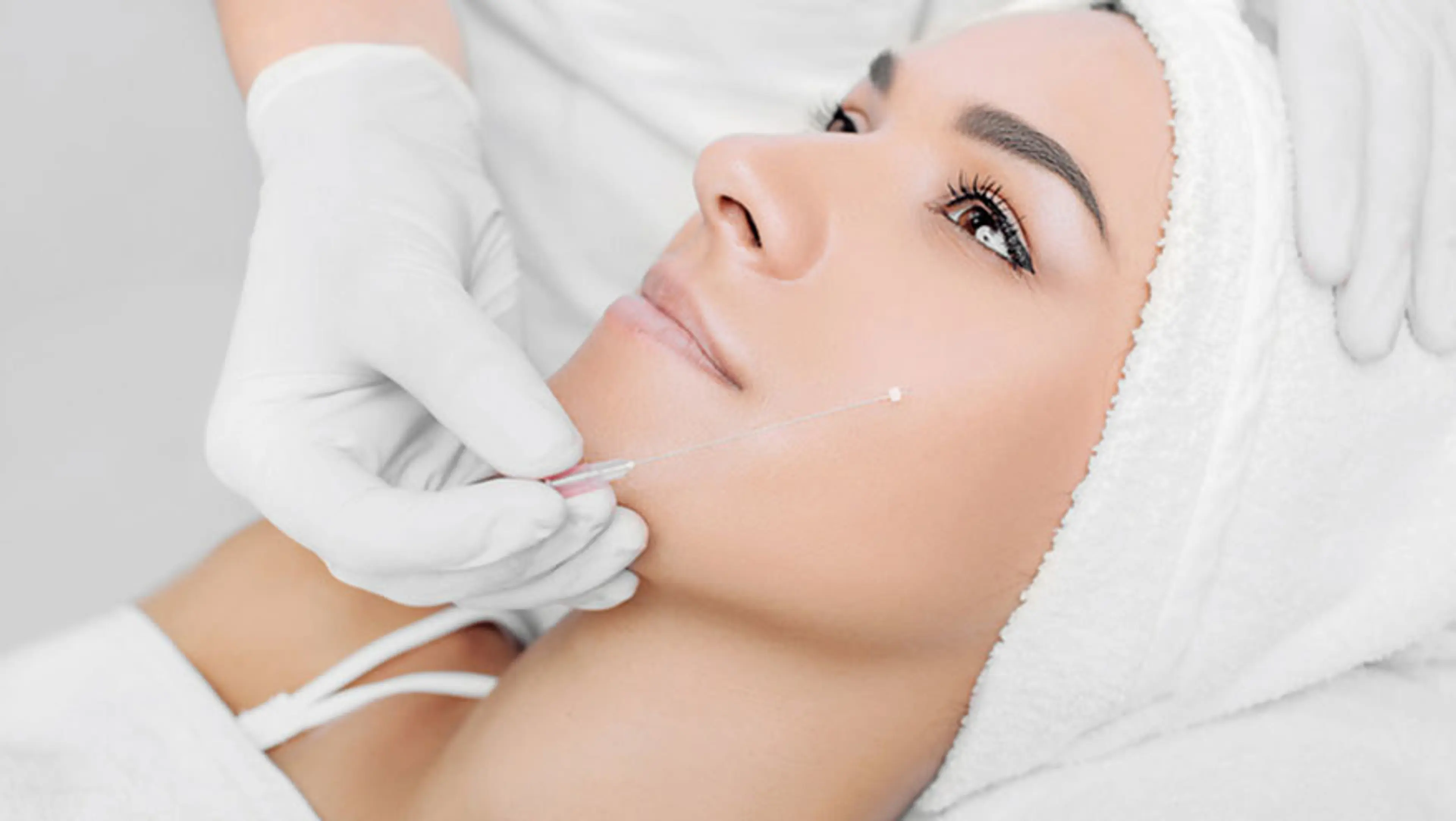
Thread lifting is a minimally invasive procedure that uses absorbable sutures to gently lift sagging skin. These threads are inserted under the skin to reposition tissue and stimulate collagen production.
Non-surgical, performed with local anesthesia
Threads are typically made from polydioxanone (PDO), poly-L-lactic acid (PLLA), or polycaprolactone (PCL)
Provides a subtle lift while triggering neocollagenesis
Ideal for early signs of aging or maintenance after other procedures
Thread lifting doesn’t remove excess skin. Instead, it creates temporary support under the skin and induces collagen over time. This makes it a great option for those who want visible, short-term improvement without surgery.
Type of thread material: PCL threads last the longest
Number and placement of threads
Patient’s skin quality, age, and lifestyle
Though threads dissolve within 6 to 12 months, the collagen produced around them may sustain the lifting effect for a few months beyond that.
Patients in their 30s to early 50s
Mild sagging around cheeks, jawline, or neck
Individuals looking for subtle, short-term improvements
Those who prefer minimal downtime and non-invasive solutions
It’s especially popular among patients preparing for events or wanting to delay surgery for a few years.
A surgical facelift (rhytidectomy) is a comprehensive procedure that addresses the visible signs of aging by repositioning deeper facial structures. At Yujin, this is never about pulling skin unnaturally tight — it’s about restoring youthful contours with precision and natural balance.
Performed under general or twilight anesthesia
Involves repositioning the SMAS (superficial musculoaponeurotic system), which supports facial structure
Removes excess skin and re-drapes the remaining tissue for a smooth, natural finish
Can be customized to address mid-face, lower face, or neck
Modern facelift techniques have evolved significantly, focusing more on vertical repositioning and deep plane adjustments rather than surface tightening alone. This ensures long-lasting and harmonious results.
Patient’s age and skin elasticity
Surgical technique used
Post-operative care and maintenance
Many patients find that even 10 years post-surgery, they still look younger than if they had never undergone the procedure.
Patients in their late 40s and older
Moderate to severe sagging, deep folds, or jowls
Sagging in the neck area (often treated in a neck lift combined with facelift)
Those seeking a long-term, transformative solution
Feature | Thread Lift | Surgical Facelift |
|---|---|---|
Invasiveness | Minimally invasive | Surgical |
Anesthesia | Local | General or twilight |
Downtime | 2–5 days | 2–3 weeks |
Result Duration | 1–2 years | 8–15+ years |
Degree of Change | Mild to moderate lift | Significant, structural change |
Skin Removal | No | Yes |
A facelift is a foundational change — think of it as rebuilding the structure — while a thread lift is more like placing support beams under a tent.
Facelifts address the deeper SMAS layer of facial anatomy — the connective tissue and muscles beneath the skin that truly dictate facial shape. By repositioning this layer, the results are more natural and long-lasting.
Thread lifts work within the subcutaneous plane and don’t affect the underlying SMAS. That’s why their effects are more limited in duration and scope.
One of the major contributors to an aged appearance is skin redundancy. As we age, the skin loses elasticity and stretches. A surgical facelift physically removes this extra skin, tightening the area and providing a cleaner contour. Thread lifts cannot remove skin — they can only redistribute it.
At Yujin, every surgical plan is tailored, often incorporating fat grafting or regenerative stem cell therapy to enhance results.
Yes — and in many cases, they complement each other beautifully.
Thread lifts are sometimes used before a facelift as a “preview” or in patients not yet ready for surgery. After surgery, threads can help maintain results or provide touch-ups to areas not targeted surgically, such as the under-eye or brow.
At Yujin, our regenerative expertise allows us to combine threads with:
Combination therapy is often the most strategic and cost-effective way to stay ahead of the aging process.
Treatment | Duration | Estimated Cost Efficiency |
Thread Lift | 1–2 years | Higher long-term cost |
Surgical Facelift | 8–15+ years | Lower long-term cost |
Thread lifts are more affordable upfront, but repeat sessions every 1–2 years can quickly add up. In contrast, a surgical facelift is a larger investment initially but often lasts a decade or more, requiring only maintenance.
Many patients come to realize that over 10 years, a facelift provides more value per year — both in appearance and confidence.
You're in your 30s to early 50s
You have mild skin laxity
You prefer non-surgical procedures with quick recovery
You're exploring early aesthetic intervention
You're in your late 40s to 70s
You have deeper facial folds, jowls, or neck sagging
You want significant, lasting change
You're ready for the investment and downtime
The right choice depends on your facial anatomy, expectations, timeline, and personal philosophy on aging. At Yujin, we always emphasize alignment — between your goals, your lifestyle, and your treatment plan.
Our approach to both thread lifting and facelifts is rooted in artistry and science. Dr. Tae-jo Kang — a pioneer in autologous fat grafting and regenerative therapies — personally oversees each procedure, ensuring technical mastery with aesthetic sensibility. With over 15 years of experience and a one-doctor system, patients benefit from continuity, trust, and safety.
If you’re considering facial rejuvenation and want to explore options that align with your long-term goals, we invite you to consult with us. You’ll receive not just a treatment recommendation, but a thoughtful, honest roadmap for your personal aging journey.